3 in stock · ships from Charlotte, NC
Buckets
The full bucket line: general-purpose, wide, and specialty profiles across every weight class we build for.
What it is for
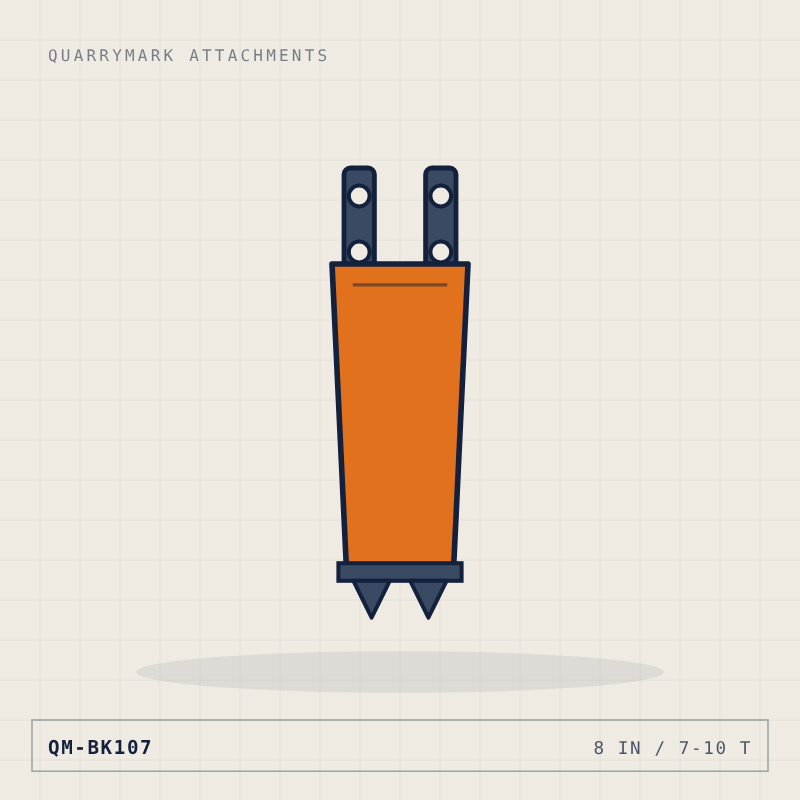
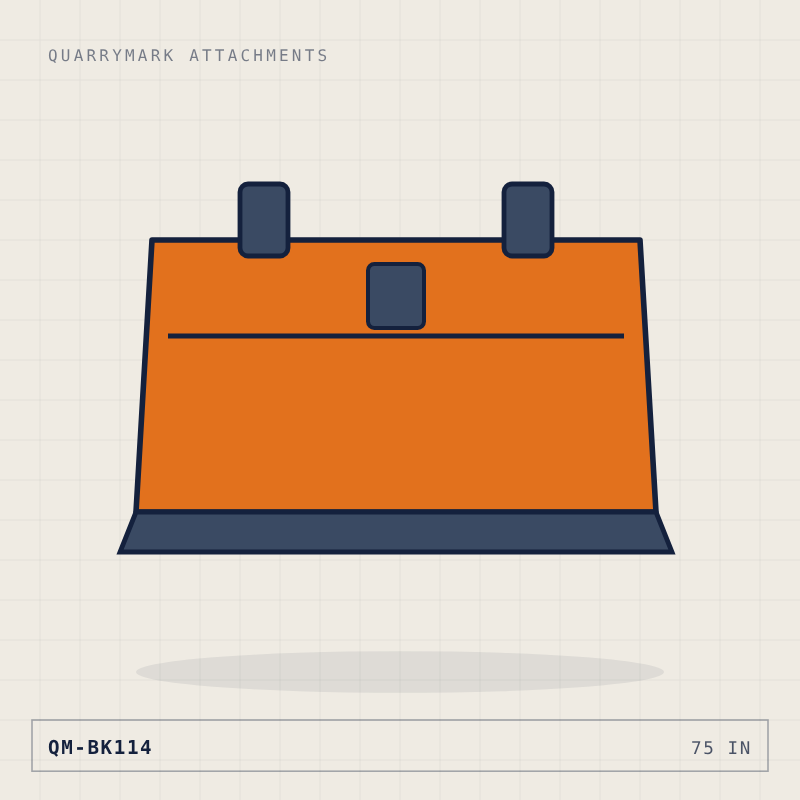
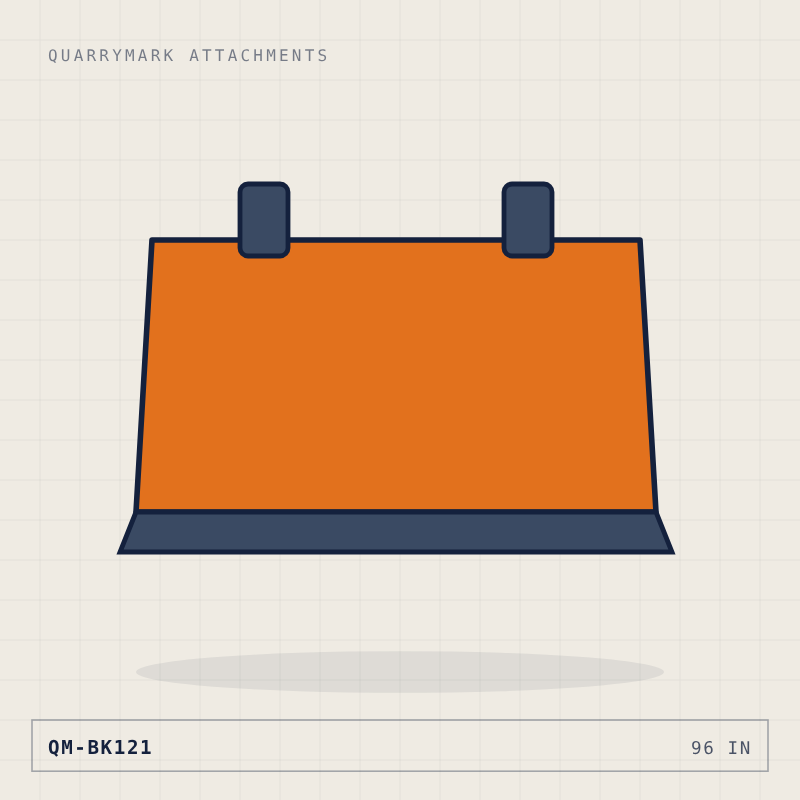
Bucket selection comes down to three numbers and one interface: the width, the SAE heaped capacity, the empty weight, and how it pins to your machine. Everything else, from profile to tooth count to cutting-edge style, follows from the material you dig and how often you dig it.
The mistake that costs the most money is buying on width alone. A wider bucket moves more per pass only while the machine can still break out at full depth; past that point the operator instinctively digs shallower passes and you lose the capacity you paid for, while running the hydraulics hotter to do it.
Empty weight is the number most catalogs bury. Every pound of bucket is a pound off your rated lift at radius, and on a mini excavator at full reach that is the constraint that actually stops the job.
How to size it
Work from operating weight to weight class, then from material density to capacity. Wet clay at roughly 2,900 lb per cubic yard and shot rock at 3,000+ will hit your lift limit at a capacity where dry topsoil at 2,000 lb is still comfortable. When in doubt, size for the heaviest material you dig more than one day a month.
In stock
3 buckets
Which machines is this for
13 machines in our database take a bucket
Graded on operating weight, pin diameter and coupler style, not on a marketing compatibility list. Pick yours to see only the units that pin to it.
Straight answers
Before you order
How do I know the bucket will actually pin to my machine?
Three dimensions have to agree: pin diameter, pin-to-pin spacing on the ears, and the dipper width between the ears. Machine Match on this site checks the first against our catalog and flags the rest for confirmation, because a machine that has already had a coupler fitted may not match its own factory spec.
Bolt-on or weld-on cutting edge?
Bolt-on for anything you expect to replace: it is a wrench job in the yard instead of a trip to the fabricator. Weld-on is stronger and cheaper up front, and is the right answer on a bucket you intend to run to destruction.
How long should a bucket last?
In topsoil and sand, years. In abrasive aggregate a standard bucket's cutting edge and side cutters are consumables measured in hundreds of hours. Track the side cutters. When the corners round off, the bucket stops holding a trench line and production drops well before anything looks broken.
