6 in stock · ships from Charlotte, NC
Ditching Buckets
Wide, smooth-edged and shallow: the finishing bucket for grading, sloping and cleanup.
What it is for
A ditching bucket (sometimes sold as a grading or clean-up bucket) is the widest attachment most contractors own relative to their machine's class. It has no teeth, a straight bolt-on cutting edge and a shallow radius, so it drags a surface flat instead of digging into it.
The width is the point: fewer passes, fewer seams and a finish an inspector will accept the first time. On sloped work such as swale bottoms, roadside ditches and pond banks, the smooth edge is what stops the bucket from digging in and scalloping the face.
Where the work is genuinely sloped rather than flat, a tilting version pays for itself quickly because the operator can hold grade without repositioning the machine. Non-tilt buckets are lighter, cheaper and better on flat cleanup.
How to size it
Go as wide as the class will carry without eating your lift capacity at full reach: typically 48 to 60 inches on a 4–9 tonne mini and 60 to 72 inches on a 10–20 tonne machine. Remember that a ditching bucket is used at long radius almost by definition, which is the least favourable point on the lift chart, so the empty weight of the bucket matters more here than on any other attachment you own.
In stock
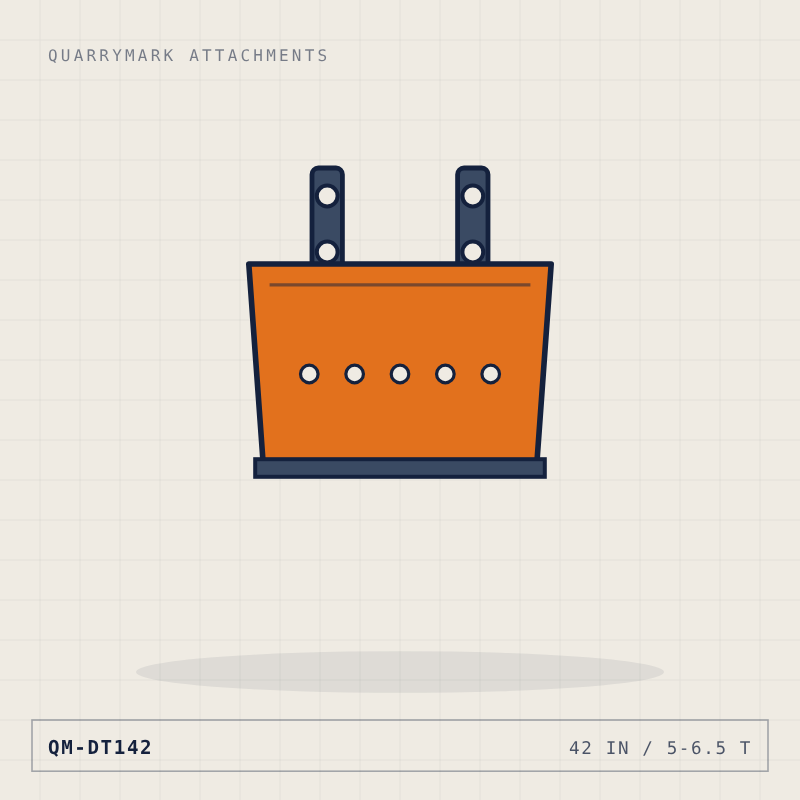
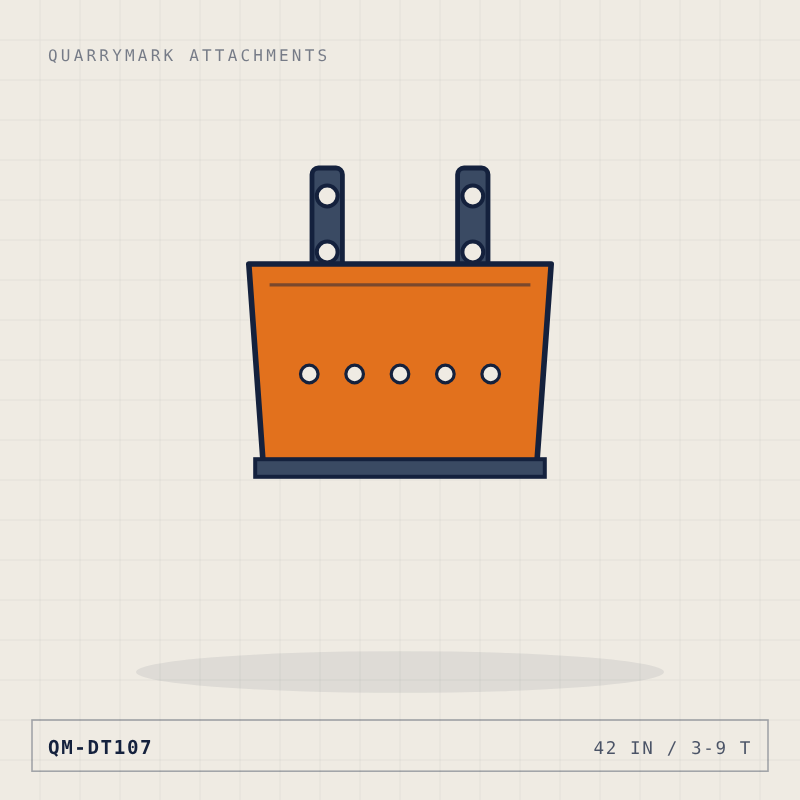
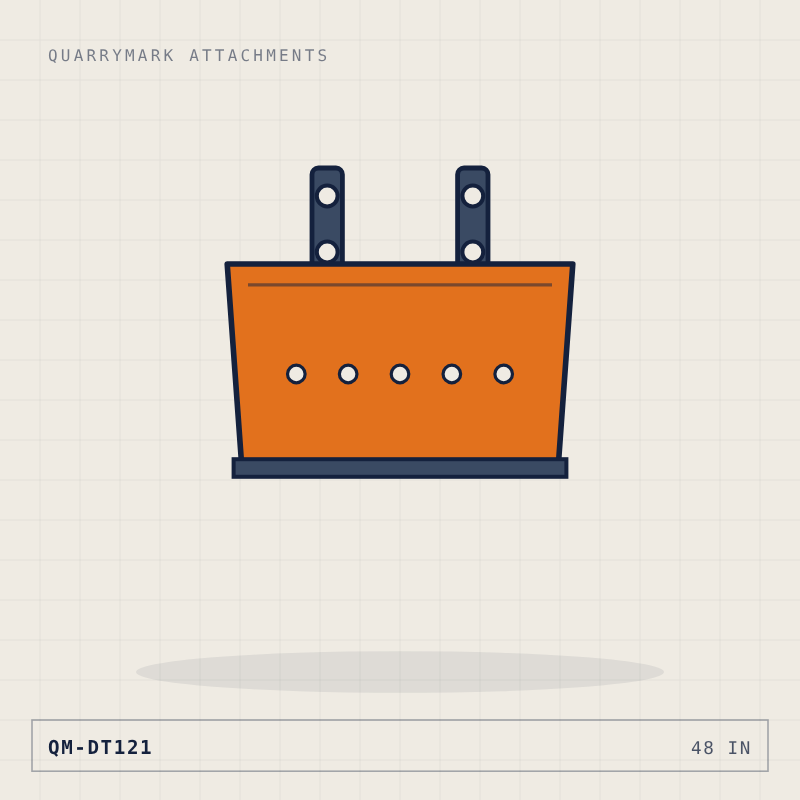
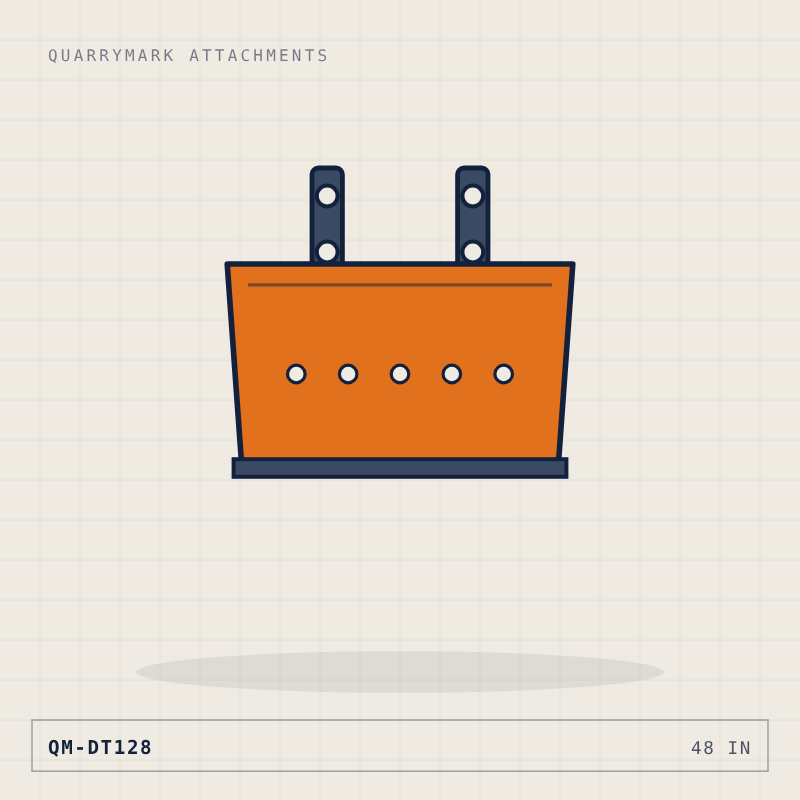
6 ditching buckets
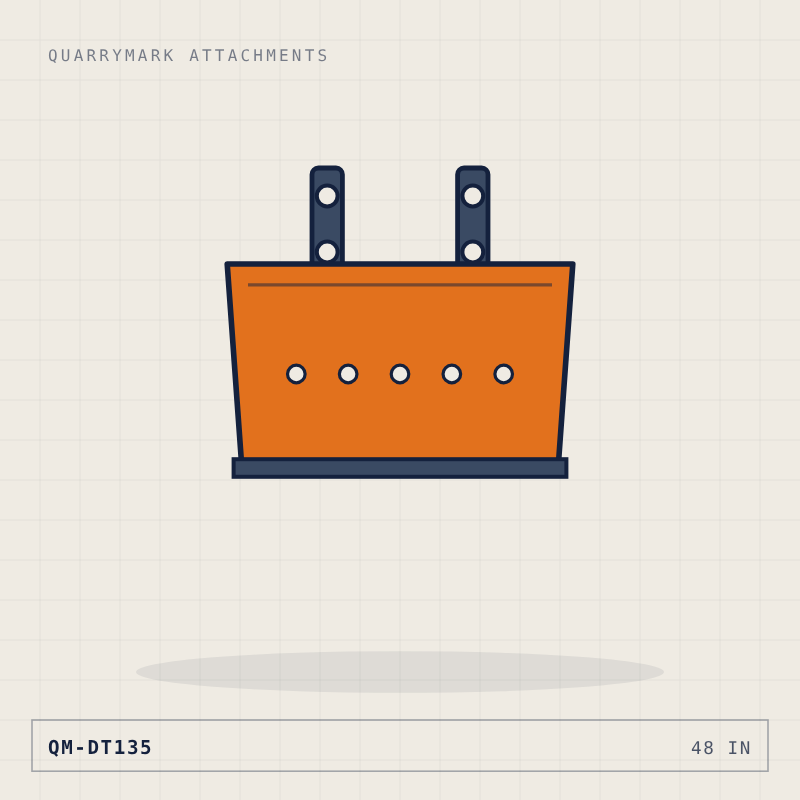
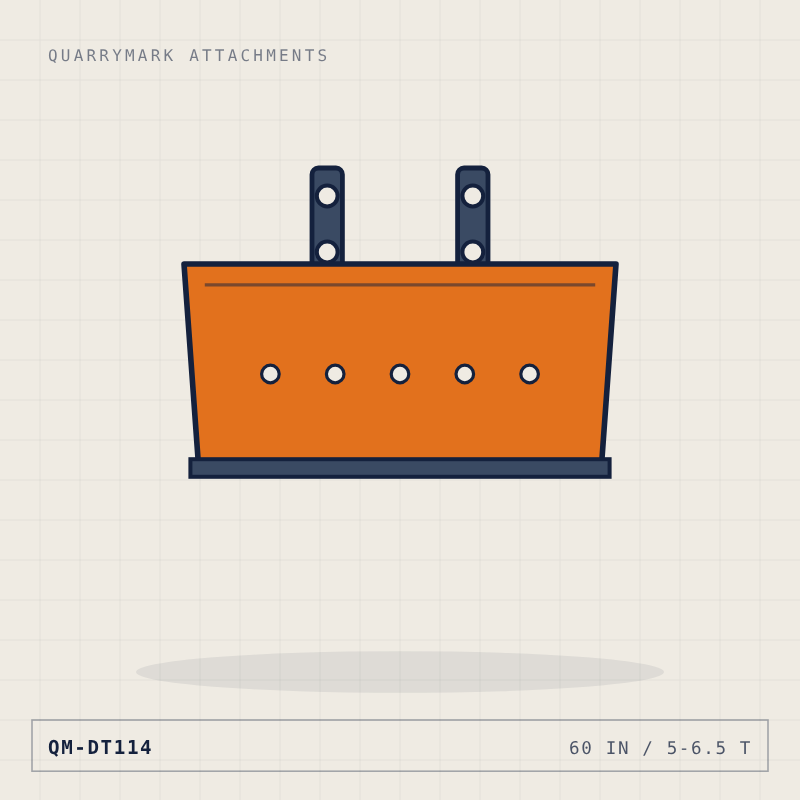
Which machines is this for
16 machines in our database take a ditching bucket
Graded on operating weight, pin diameter and coupler style, not on a marketing compatibility list. Pick yours to see only the units that pin to it.
Straight answers
Before you order
Is there a difference between a ditching bucket and a grading bucket?
In North American practice the terms are used interchangeably for the same wide, toothless bucket. Some manufacturers reserve 'ditching' for a slightly dished profile that holds material on a slope and 'grading' for a flatter one. Judge the profile in the photo and the spec, not the name.
Do I need the hydraulic tilt version?
If more than a quarter of your hours are on sloped or crowned work, yes. Tilt eliminates the constant repositioning that eats your day and produces a visibly better face. If you mostly backfill and flatten pads, save the money and the hydraulic circuit.
Can I dig with a ditching bucket?
Only in loose material. With no teeth and a shallow radius it will not penetrate compacted soil, and forcing it puts bending load into a cutting edge that was designed to be dragged, not pried. Keep a digging bucket on the trailer.
