2 in stock · ships from Charlotte, NC
Severe Duty Buckets
Rock buckets for demolition, quarry and shot rock, with heavier plate everywhere it counts.
What it is for
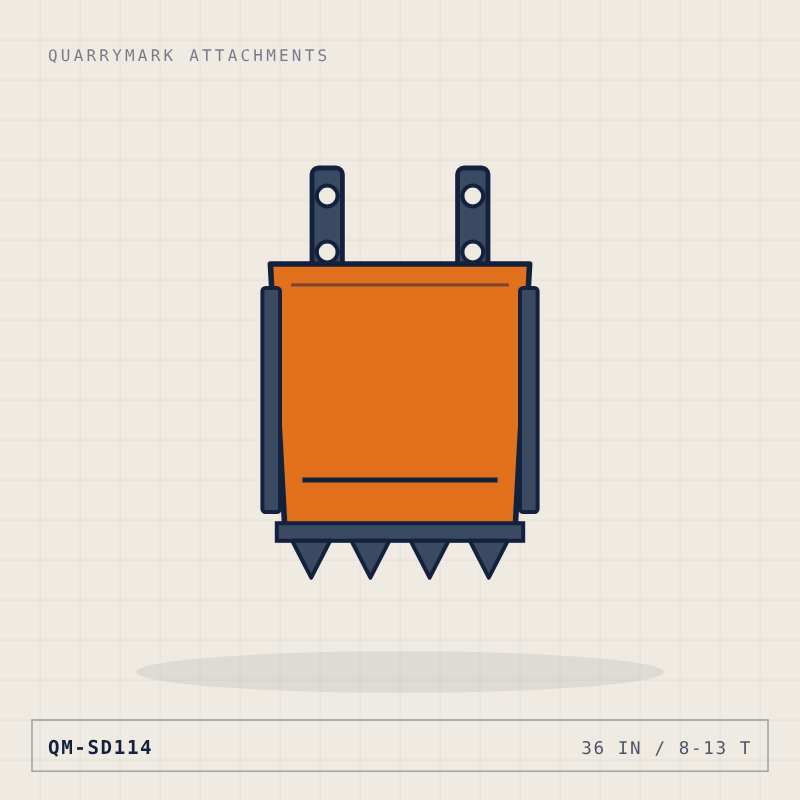
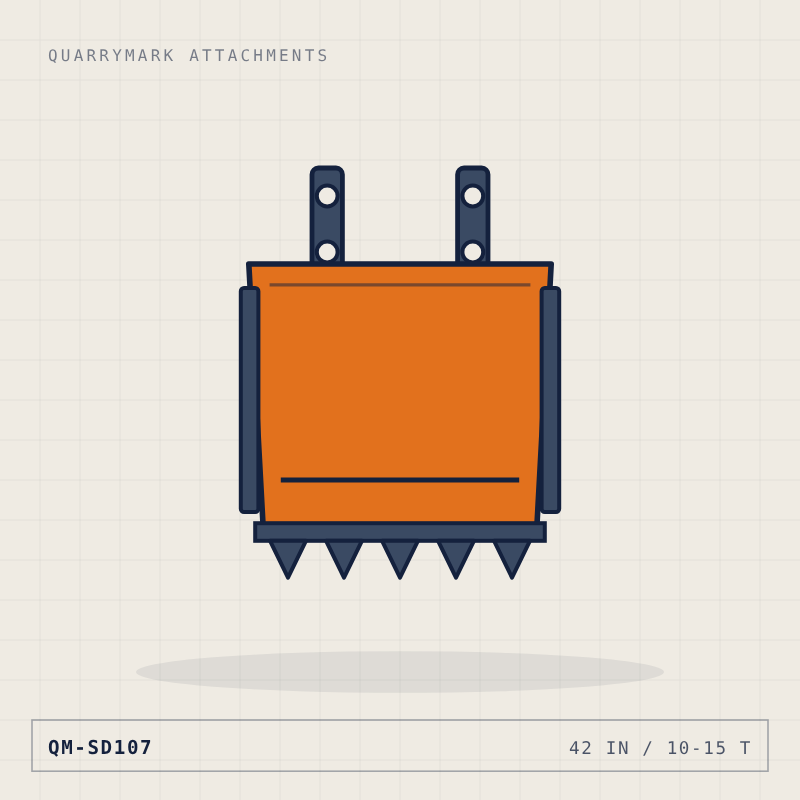
A severe-duty bucket is not a general-purpose bucket with thicker steel bolted on; the whole structure is different. Wear plate is doubled across the bottom and wrapped up the heel, the side plates carry full-length wear strips, and the tooth adapters are heavy-duty castings rather than the weld-on shanks used on a standard bucket.
This matters because rock does not wear a bucket evenly. It destroys the heel and the outer corners while the middle looks new. Bucket failures in demolition are almost always heel failures, and once the heel opens up the repair is worth more than the bucket.
The trade is weight. A severe-duty bucket of the same nominal capacity can weigh 30–45% more than the standard version, which comes directly off your lift chart. That is a fair trade in shot rock and a bad one in dirt.
How to size it
Drop one capacity step from what you would run in soil. If your 22-tonne machine carries a 42-inch general-purpose bucket, run a 36-inch severe-duty in rock. The heavier structure plus denser material will otherwise put you over the machine's rated lift at radius, and the operator will feel it as a soft, slow, hot machine long before anything actually breaks.
Which machines is this for
5 machines in our database take a severe duty bucket
Graded on operating weight, pin diameter and coupler style, not on a marketing compatibility list. Pick yours to see only the units that pin to it.
Straight answers
Before you order
When is a severe-duty bucket actually worth the premium?
When your material has shot rock, reinforced concrete, slag, or recycled aggregate in it. In those conditions a standard bucket is a consumable measured in months. In topsoil and clay the premium never pays back and you are just carrying dead weight.
What steel are they built from?
The structural body is standard mild-steel plate, with abrasion-resistant wear plate in the 400–500 Brinell range on the bottom, heel and side wear strips. Building an entire bucket from AR plate would be both expensive and brittle. AR steel resists abrasion, it does not resist impact, so it belongs in the wear surfaces and not the structure.
Can I add wear plate to a standard bucket instead?
You can, and it buys you time on a bucket you already own. What retrofit wear plate cannot fix is the tooth adapter design and the heel geometry, which is where a severe-duty bucket earns its money. Treat it as a repair, not an upgrade.
