8 in stock · ships from Charlotte, NC
Trenching Buckets
Narrow, deep and squared off, built to cut a clean utility trench with vertical walls in one pass.
What it is for
A trenching bucket trades capacity for wall quality. The narrow profile means every cubic inch of soil moved is soil you actually needed to move, and the squared corners leave a trench a pipe layer can bed properly instead of a V-shaped ditch that has to be over-excavated and backfilled.
Sidewalls are heavier gauge than a general-purpose bucket of the same class because a narrow bucket concentrates enormous side load when the operator corrects the line mid-pass. Ours run a reinforced heel plate for that reason. The heel, not the teeth, is what actually kills a trenching bucket.
Widths from 12 to 24 inches cover almost all service work: 12 inches for irrigation, conduit and fibre, 18 inches for water and sewer laterals, 24 inches where a man needs to work in the trench with a compactor.
How to size it
Size the bucket to the pipe plus the bedding, then to the machine, not the other way round. A 12-inch bucket on a 5-tonne machine digs quickly and is cheap to run; the same 12-inch bucket on a 9-tonne machine wastes most of the machine's breakout force and beats up the bucket's heel. Check the pin diameter and the coupler style before you order: a Bobcat X-Change, a John Deere wedge lock and a straight pin-on are three different mounts on the same nominal tonnage class.
In stock
8 trenching buckets
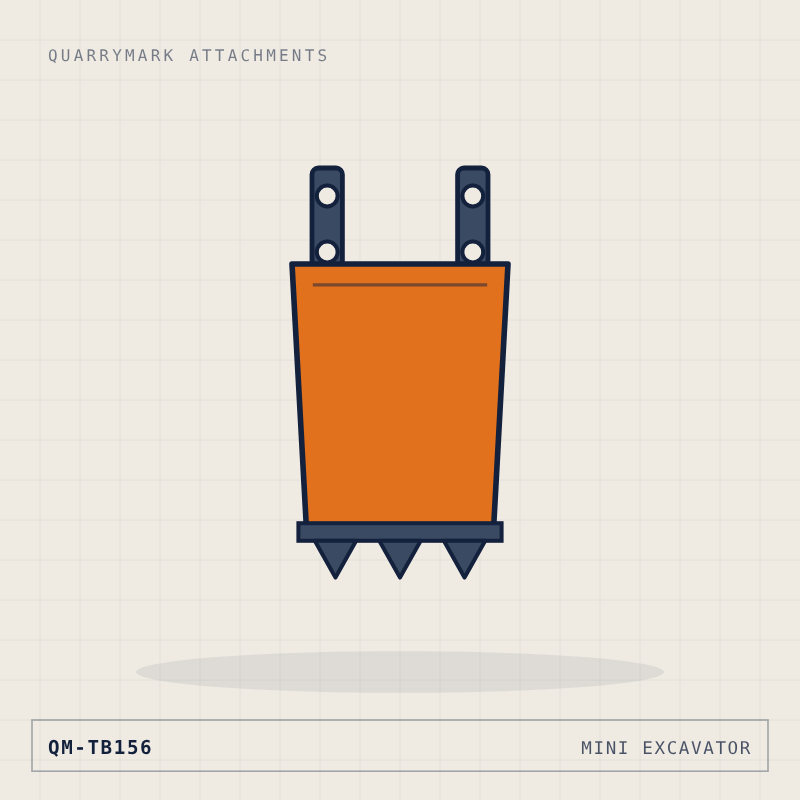
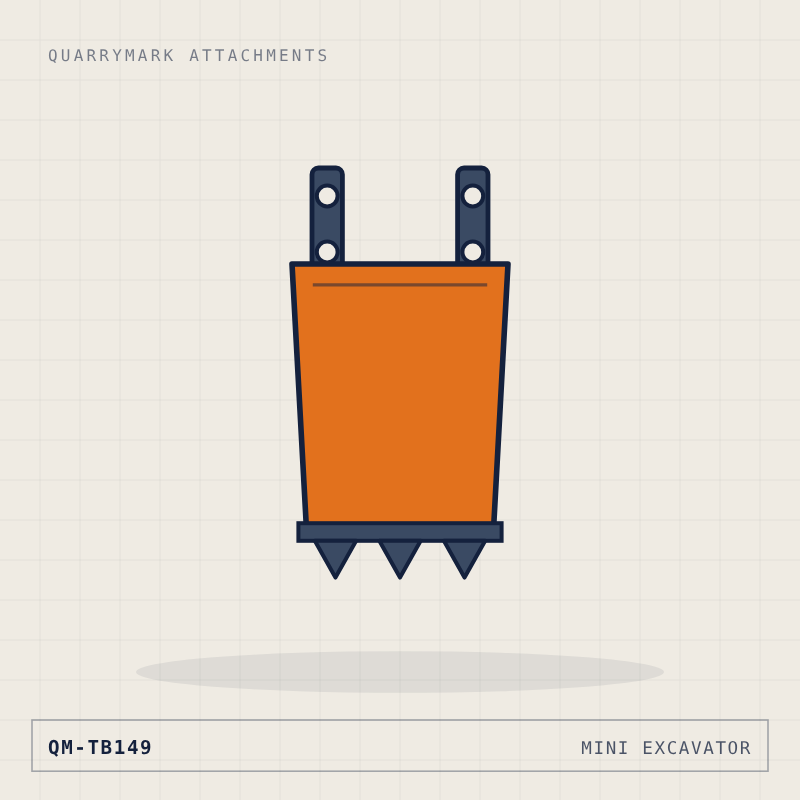
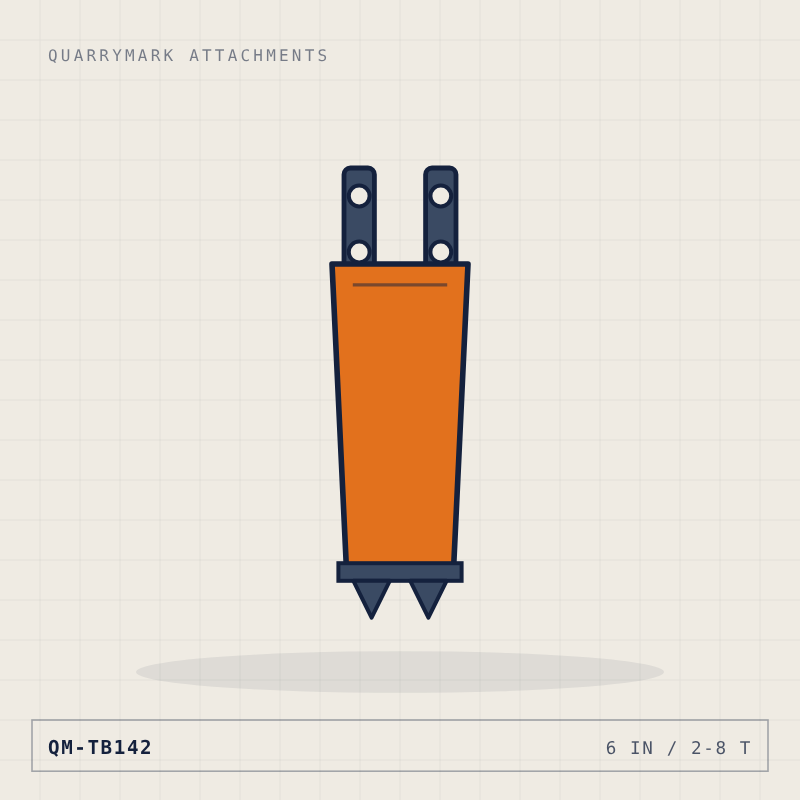
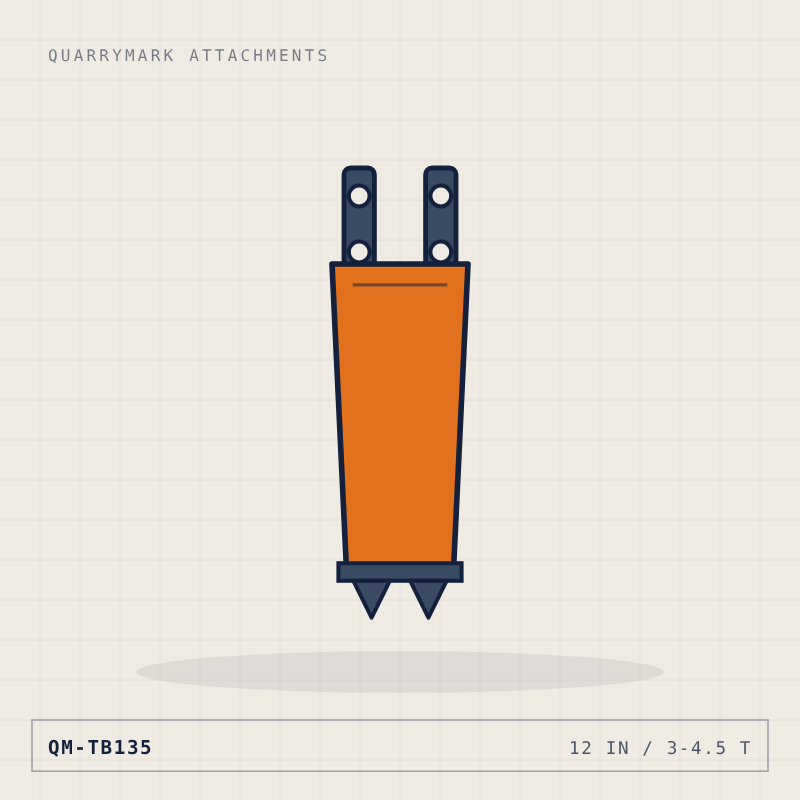
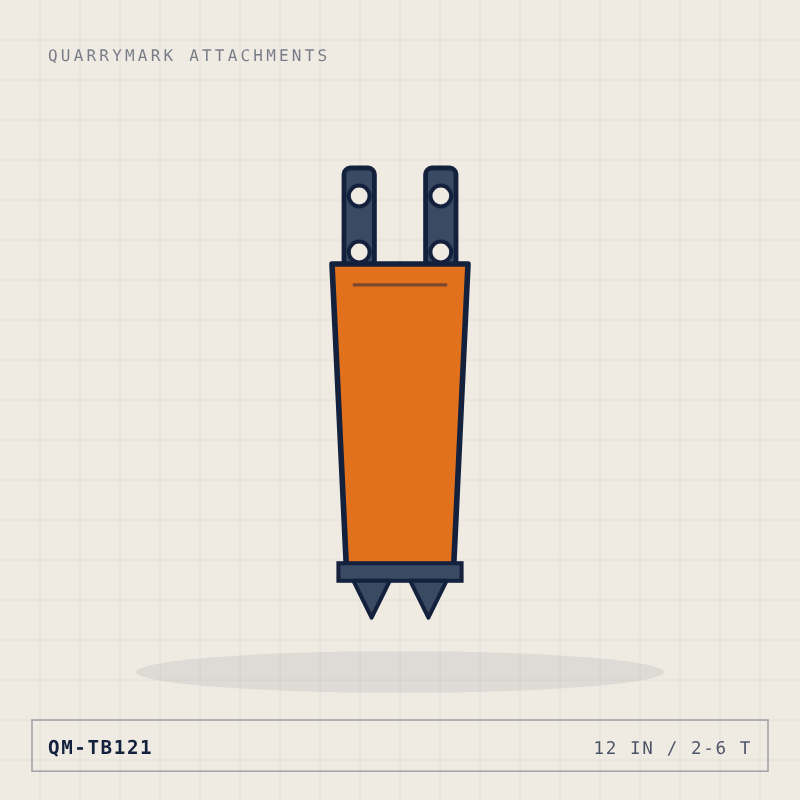
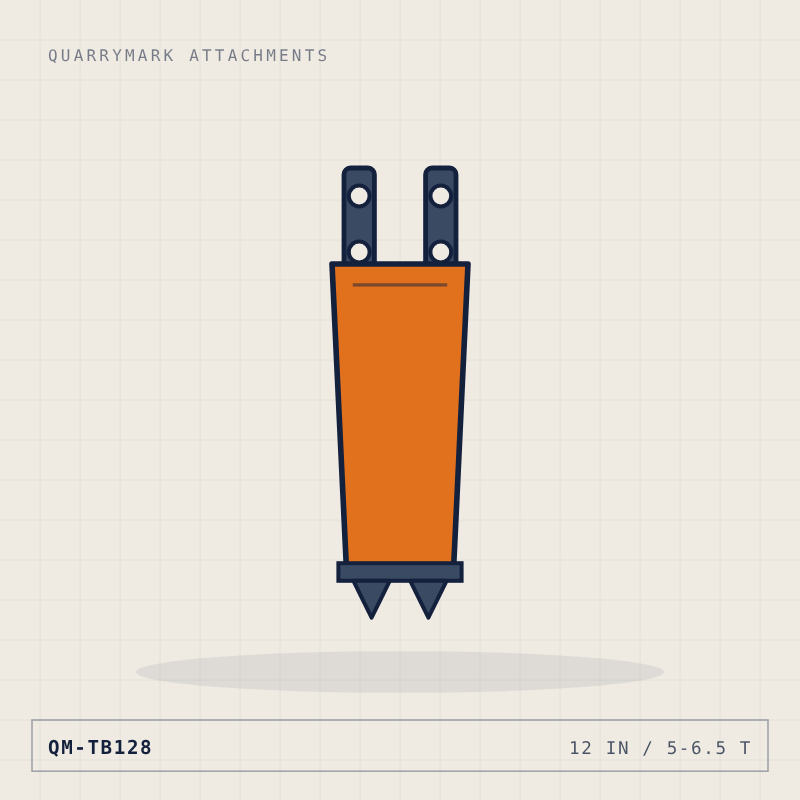
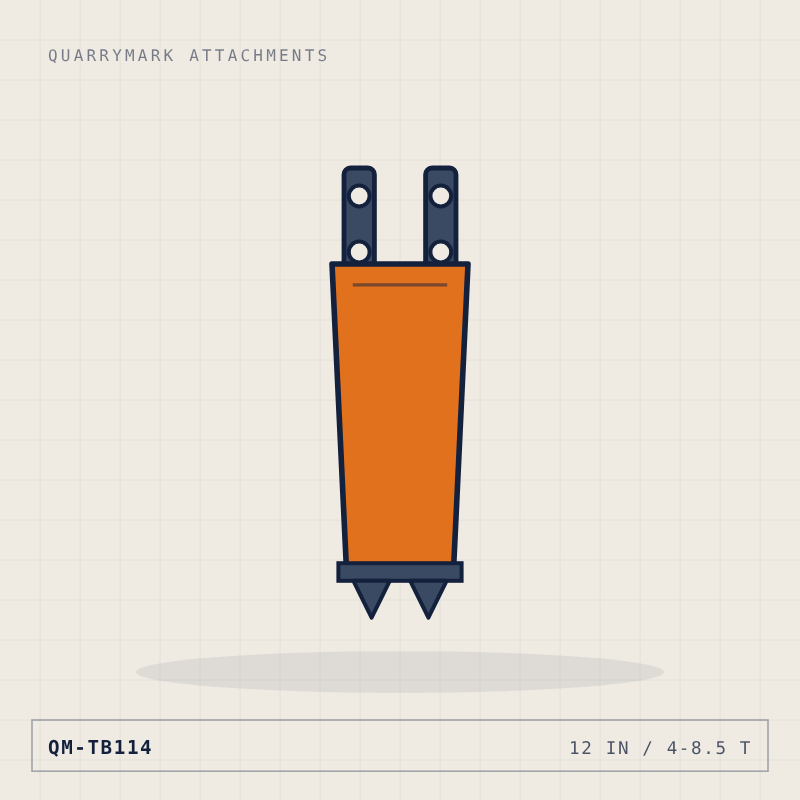
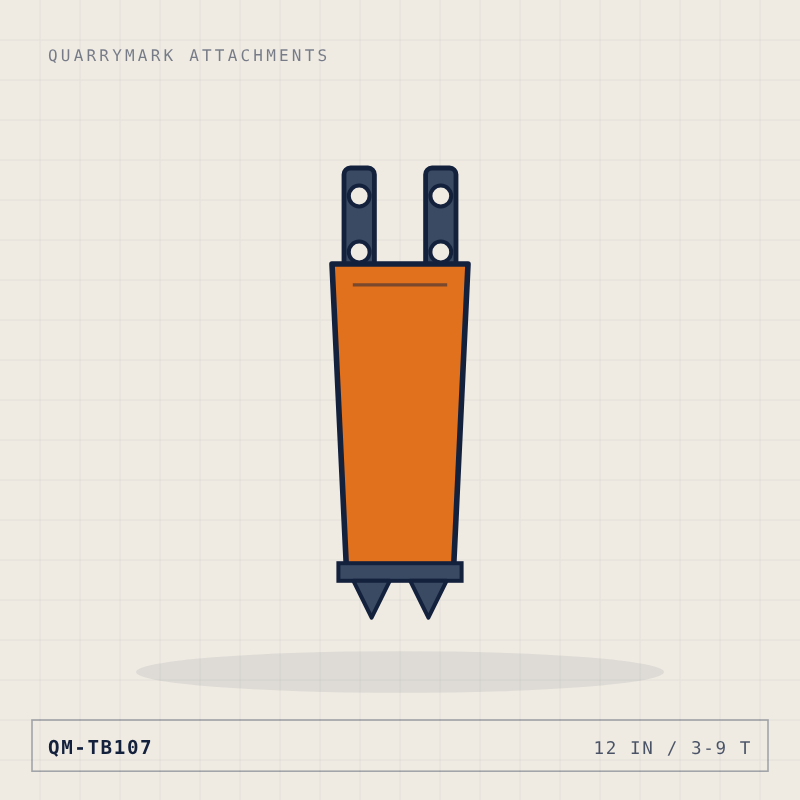
Which machines is this for
29 machines in our database take a trenching bucket
Graded on operating weight, pin diameter and coupler style, not on a marketing compatibility list. Pick yours to see only the units that pin to it.
…and 1 more. Browse every machine.
Straight answers
Before you order
What width trenching bucket for a water line?
For a 3/4-inch to 2-inch service line, 12 inches is enough and it is the cheapest trench you will ever dig. For a 4-inch to 6-inch main with bedding stone, go to 18 inches so the pipe sits centred with room to compact either side. Municipal specs frequently dictate this, so read the spec before you read the catalog.
Do trenching buckets come with teeth?
Yes, and you want them. A narrow bucket has very little edge in contact with the soil, so tooth penetration is what keeps the bucket cutting instead of skating. Bolt-on side cutters keep the trench walls from closing in on the bucket as it fills.
Will a trenching bucket fit my coupler?
Only if it is drilled for it. We build the same bucket in pin-on, Bobcat X-Change, Kubota wedge and John Deere wedge lock configurations. Run your make and model through Machine Match and the catalog filters itself down to the ones that physically pin to your stick.
