4 in stock · ships from Charlotte, NC
Hydraulic Hammers
Breakers matched to your carrier's flow and pressure, not just to its weight.
What it is for
A hydraulic hammer is the one attachment where a mismatch damages the machine rather than merely disappointing you. The hammer is sized by impact energy in joules and by the carrier's hydraulic flow in gallons per minute and working pressure. A breaker starved of flow hits softly and heats the oil, and one oversized for the carrier destroys the boom, stick and pins over time.
Impact energy and blow rate trade against each other. High energy per blow with a lower frequency breaks large rock and mass concrete efficiently; lower energy at a high blow rate is better on asphalt, thin slab and trenching in soft rock, where you want to fracture continuously rather than punch holes.
Tool selection is the cheap variable most owners ignore: a moil point for general breaking, a chisel for directional cracking along a line, a blunt tool for mass concrete where you want to shatter rather than penetrate.
How to size it
Match the hammer's specified carrier weight range AND check your auxiliary circuit's flow and relief pressure against the hammer's requirement. The tonnage range alone is not sufficient, because two machines of identical weight can be plumbed very differently. Then match the tool to the material. Running a breaker with the tool not held firmly against the work ('blank firing') is the single fastest way to destroy both the hammer and its warranty.
In stock
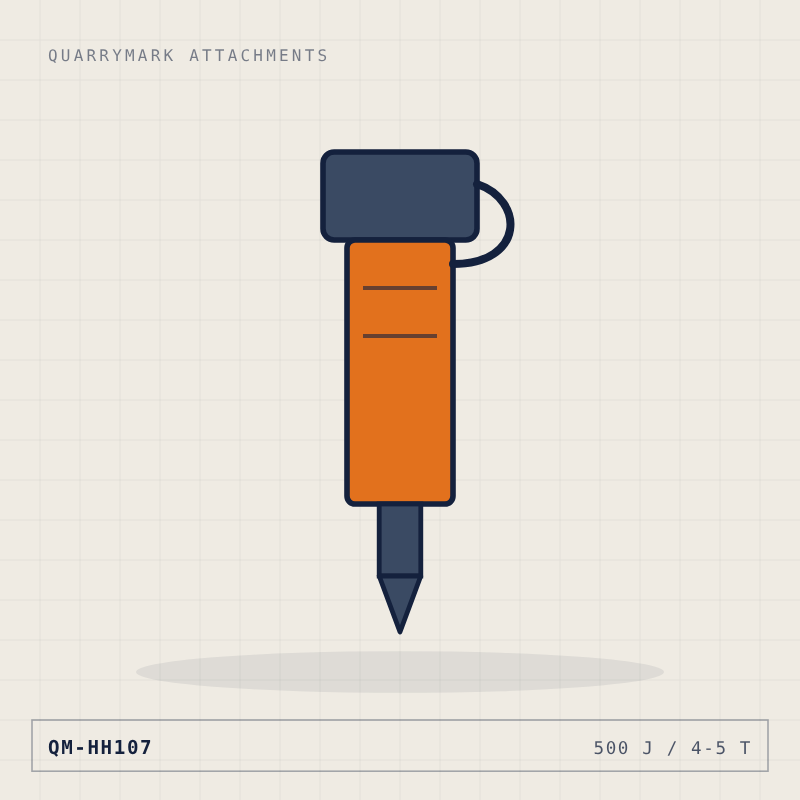
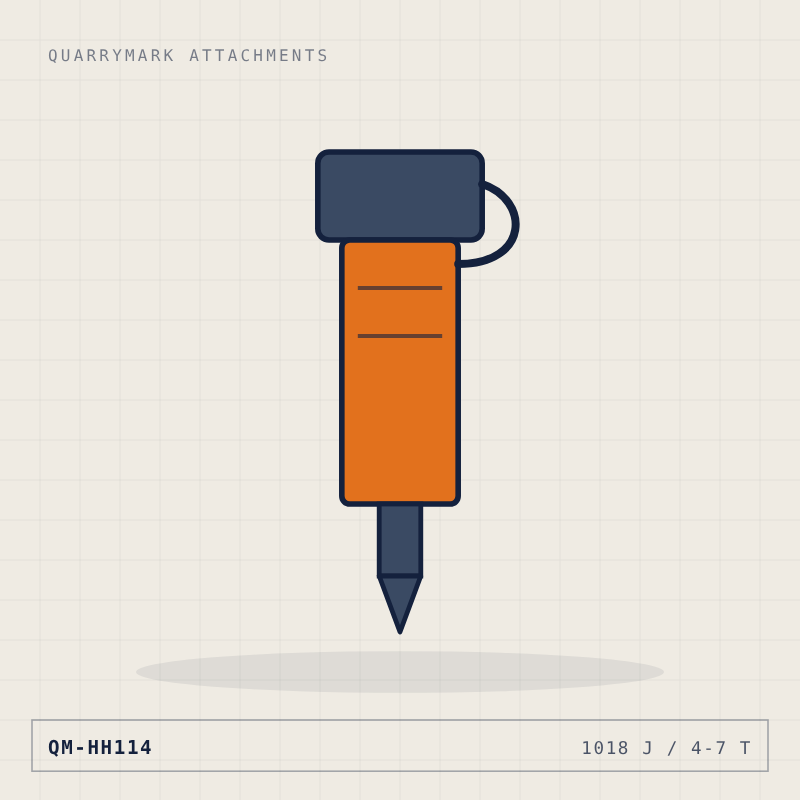
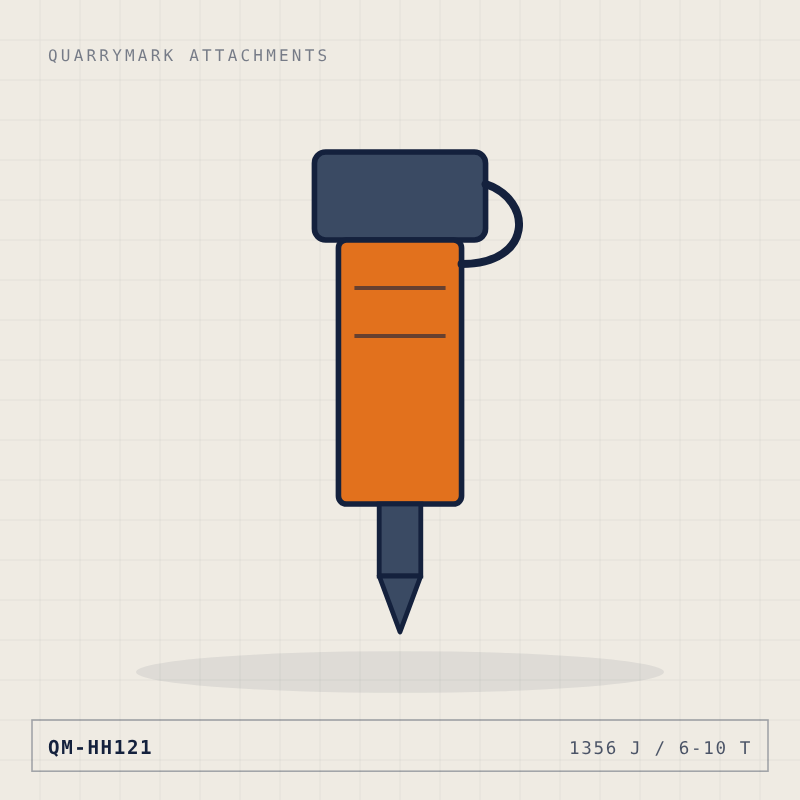
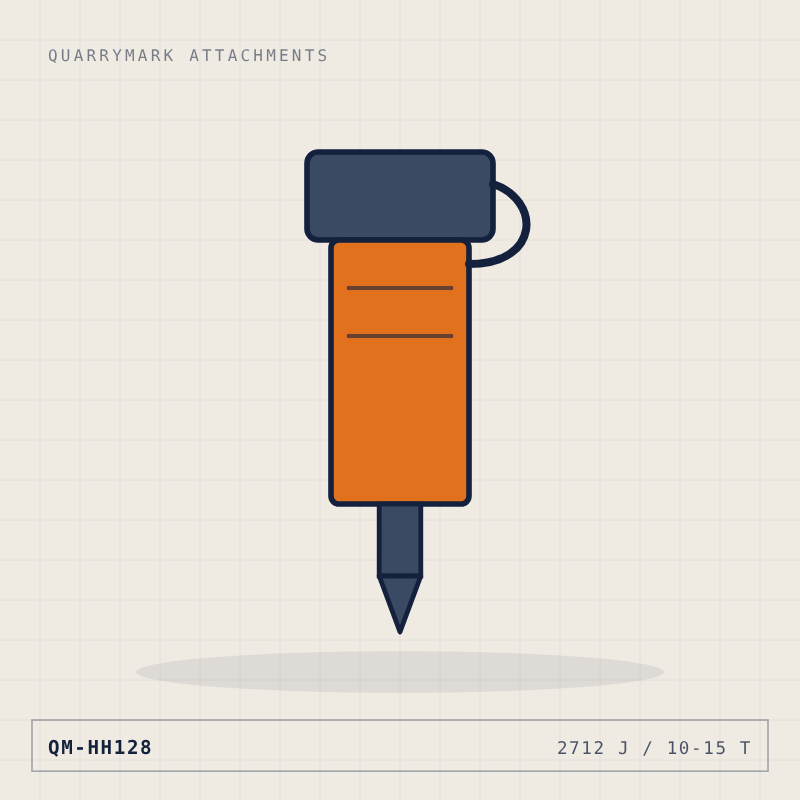
4 hydraulic hammers
Which machines is this for
43 machines in our database take a hydraulic hammer
Graded on operating weight, pin diameter and coupler style, not on a marketing compatibility list. Pick yours to see only the units that pin to it.
…and 15 more. Browse every machine.
Straight answers
Before you order
What size hammer for a 5-tonne mini excavator?
Typically a 400–700 joule class breaker, with the exact choice set by your auxiliary flow. In that class the machine's hydraulic circuit, not its weight, is usually the binding constraint, so check the flow rating in the operator's manual before you order.
How often does the tool need greasing?
Every two hours of operation with a chisel-paste grease, applied with the tool pressed up into the hammer so grease reaches the bushing rather than the void. Under-greasing is the leading cause of premature bushing and tool wear, and it is entirely preventable.
Can I use a hammer for trenching in rock?
Yes, and it is one of the most productive uses, but work in a line and reposition often rather than trying to lever the tool sideways. Side load is what breaks tools and cracks front heads. Break, move, break.
